


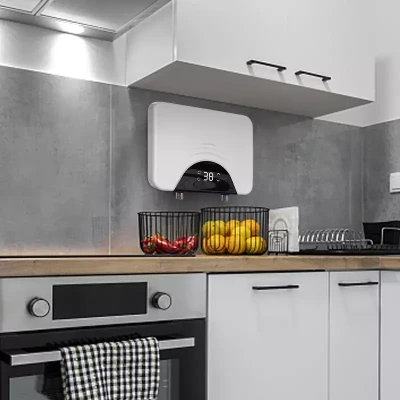
Altitude can have a notable impact on the performance and functionality of wall hung electric water heaters. As a supplier of a wide range of wall hung electric water heaters, including Vertical Hot Water Heater, Medical Clinic Electric Water Heater, Electric Storage Water Heater 5 Star, Large Electric Geyser, and 50L Anti-Scaling Electric Water Heater, understanding these effects is crucial for providing optimal solutions to our customers in various geographical locations.
1. Boiling Point Variation
One of the most significant effects of altitude on a wall hung electric water heater is the change in the boiling point of water. At sea level, water boils at 100°C (212°F). However, as altitude increases, atmospheric pressure decreases. This reduction in pressure causes the boiling point of water to drop. For every 300 meters (1000 feet) increase in altitude, the boiling point of water decreases by approximately 1°C (1.8°F).
In high - altitude areas, the lower boiling point means that water will reach a "boiling" state at a lower temperature. This can be a major issue for a wall hung electric water heater because it may not be able to heat the water to the typical "hot" temperatures expected at sea level. For example, in a location at an altitude of 3000 meters, water will boil at around 91°C (196°F). If a user is accustomed to water at 100°C for tasks like making tea or cleaning, they may find the water from the heater not hot enough.
From a technical perspective, the thermostat of the water heater is usually calibrated for sea - level conditions. So, the thermostat may shut off the heating element earlier than expected at high altitudes, as it detects that the water has reached the boiling point (albeit at a lower temperature). This can lead to dissatisfaction among users who rely on hot water for their daily needs.
2. Heating Efficiency
Altitude can also influence the heating efficiency of a wall hung electric water heater. At higher altitudes, the density of air decreases. The heating elements in an electric water heater are often cooled by the surrounding air to some extent during operation. With less - dense air, the convective cooling effect is reduced.
In some cases, this can lead to overheating of the heating elements. When the heating elements overheat, they may become damaged more quickly, reducing the lifespan of the water heater. Additionally, overheating can cause the water heater to operate in an inefficient manner. The electrical energy input may not be converted into heat energy effectively, leading to increased energy consumption and higher utility bills for the user.
On the other hand, the lower atmospheric pressure at high altitudes can also affect the water circulation inside the heater. The reduced pressure can make it more difficult for the hot water to rise and distribute evenly throughout the tank. This can result in uneven heating, with some parts of the water in the tank being hotter than others.
3. Pressure Considerations
The pressure inside a wall hung electric water heater is carefully regulated at normal - altitude conditions. The pressure relief valve is set to open at a certain pressure to prevent over - pressurization and potential damage to the heater.
At high altitudes, the lower atmospheric pressure outside the heater means that the pressure differential between the inside and outside of the tank is different from what it is at sea level. This can cause the pressure relief valve to open prematurely or not function as intended. If the valve opens too often, it can lead to water leakage and waste. Conversely, if it fails to open when needed due to the altered pressure conditions, it can pose a safety hazard, such as the risk of the tank exploding.
Moreover, the pipes and connections of the water heater are also designed to withstand a certain range of pressures. The lower external pressure at high altitudes can put additional stress on these components, increasing the likelihood of leaks and other plumbing issues.
4. Scale Formation
Water hardness varies by location, and the formation of scale inside a water heater is a common problem. However, altitude can also play a role in scale formation. At higher altitudes, the reduced boiling point can change the solubility of minerals in water.


When water is heated, minerals such as calcium and magnesium carbonate precipitate out of the water and form scale on the heating elements and the inner walls of the tank. Since the water boils at a lower temperature at high altitudes, the rate of precipitation may be different compared to sea - level conditions. In some cases, the lower temperature may slow down the scale - forming process, but it can also lead to a different type of scale formation. The altered scale may be more difficult to remove and can still cause problems for the efficient operation of the heater.
Adapting Wall Hung Electric Water Heaters for High - Altitude Use
As a water heater supplier, we strive to provide solutions that can perform well in different altitude conditions. One approach is to adjust the thermostat settings of the water heater. By recalibrating the thermostat, we can ensure that the water is heated to a temperature that is suitable for high - altitude use.
For the heating elements, we can design them to be more resistant to overheating. This may involve using materials with better heat - dissipation properties or adjusting the power output of the elements to compensate for the reduced convective cooling at high altitudes.
In terms of pressure regulation, we can develop pressure relief valves that are more adaptable to different altitude conditions. These valves can be designed to take into account the lower atmospheric pressure at high altitudes and ensure proper pressure control inside the tank.
To address the issue of scale formation, we can offer water heaters with advanced anti - scaling features. For example, our 50L Anti - Scaling Electric Water Heater is designed to minimize the impact of scale on the performance of the heater, regardless of the altitude.
Conclusion
Altitude has a multi - faceted impact on wall hung electric water heaters, affecting the boiling point of water, heating efficiency, pressure regulation, and scale formation. As a dedicated supplier of wall hung electric water heaters, we understand these challenges and are committed to providing high - quality products that can overcome the difficulties associated with different altitude conditions.
Whether you are looking for a Vertical Hot Water Heater for your home, a Medical Clinic Electric Water Heater for a healthcare facility, or any other type of water heater from our product range, we have the expertise to ensure that you get a product that meets your specific needs, regardless of your location's altitude.
If you are interested in learning more about our products or would like to discuss your water heater requirements, we encourage you to reach out to us. Our team of experts is ready to assist you in making the right choice for your hot water needs.
References
- "Engineering Thermodynamics" by Yunus A. Cengel and Michael A. Boles
- "Handbook of Plumbing Engineering" by Stephen A. Korpan