



The "carbon barriers" in the international market are widely built, and the "carbon reduction" of China's home appliance industry has a long way to go.
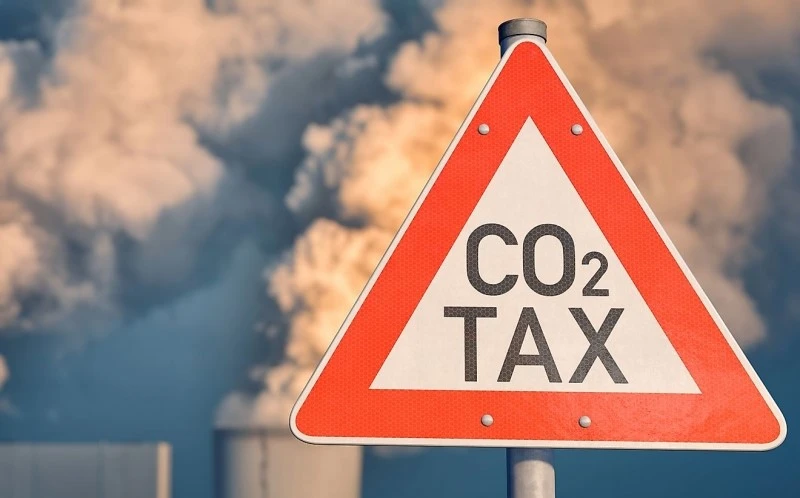
On April 25, 2023, the Council of the European Union voted to adopt the "Carbon Border Adjustment Mechanism (CBAM)", and it is planned that the first batch of "carbon tariffs" will be imposed on the cement, steel, electricity, aluminum and fertilizer industries. The mechanism is expected to be formally implemented in 2026. Before that, the EU has set up a transitional period for the implementation of the "carbon tariff". From October 1, 2023 to 2025, the above-mentioned products imported into the EU are not required to pay the "carbon tariff" for the time being, but importers are required to submit a carbon footprint report including the total amount of imported products in the current quarter, direct and indirect carbon emissions of products, etc. It is estimated that from 2026, the EU will gradually realize and raise the carbon tax rate in 10 years, and the time window left for related industries is already urgent.
International trade "carbon barriers" are surrounded by high walls.
Chen Ronghui, a researcher in the Standards and Regulations Department of China Household Electrical Appliances Association, told China Household Electrical Appliances Network that CBAM has no direct impact on China's household electrical appliances export to the EU, but it may have an indirect impact on the cost of the household electrical appliances industry. Studies have shown that the implementation of carbon tariffs will erode the profits of related industries by up to 40%, and these costs will be transmitted in the industrial chain. "Steel, aluminum and other commodities on the list are important upstream materials in the home appliance industry. The implementation of CBAM may lead to the overall price increase of these products, which in turn will affect the manufacturing cost of home appliances. We need to closely observe the cost of home appliances exported to the EU."
At the same time, she mentioned, "Compared with CBAM, we believe that the EU's carbon-related legislation on home appliances is more likely to be reflected in eco-design regulations, that is, technical barriers. As early as November 3, 2020, the Plan of Action for Circular Economy (CEAP) issued by Europe put forward the idea of sustainable ecological design regulations (ESPR), which is aimed at replacing the current energy-related product ecological design instructions, namely ErP instructions; ESPR aims to explore the relevant testing methods about carbon footprint, durability, renewable material composition and so on, and evaluate the feasibility of products being included in ESPR. Subsequently, in March, 2022, the European Commission issued the proposal of the Regulation on Ecological Design of Sustainable Products (ESPR), proposing to extend the scope of ecological design to products such as electronic and information communication equipment, batteries, motor vehicles, packaging, plastics, textiles and buildings. In addition to focusing on product energy efficiency, we should also pay attention to information disclosure requirements such as resource efficiency, environmental footprint (PEF) and carbon footprint (CFP). In June this year, the regulations on the ecological design of smartphones and tablets and the regulations on energy efficiency labeling issued by the European Commission showed that the' maintainability index' has been included in the label, and the environmental footprint (PEF) will be considered in the next regulatory review. "
"In addition, it is worth noting that according to the latest TBT bulletin of the European Union's ecological design regulations on dryers and local space heaters in January 2023, the above two types of household appliances will pay more attention to resource efficiency, and designs that are conducive to 3R (reduce), reuse and recycling may be developed in the future, but the bulletin has not mentioned the correlation between environmental footprint (PEF) and carbon footprint (CFP).
Similar to the European Union, in the latest certification system of Environmental Impact Assessment Tool for Electronic Products (EPEAT), the United States has also proposed two standards for the carbon emission of photovoltaic modules in the whole life cycle-low carbon emission (mandatory satisfaction) and ultra-low carbon emission (selective satisfaction). All photovoltaic module products included in EPEAT certification system must meet the requirements of "low carbon emission" before September 30, 2023. In addition, for the upstream industry of household appliances, the United States has also put forward more proposals on the investigation of carbon emission intensity. For example, the recent "PROVE IT Act" requires that within two years of its entry into force, the US Department of Energy will conduct a comprehensive study and publish the carbon emission intensity of specific products produced in the United States and other countries, and compare them to demonstrate that American products have low-carbon advantages. The Act covers a wide range of products, including aluminum, steel, plastics, cement, biofuels, glass, fertilizers, hydrogen, lithium batteries, solar cells and panels, wind turbines and Such as steel and aluminum, are all traditional industries in China, while solar energy, lithium batteries, wind power generation and hydrogen energy are the key new energy industries in China in recent years.
As a part of the global industrial chain, whether it is "carbon tariff" or other carbon barriers, China's home appliance industry can't be immune to it. "At present, the pressure of carbon reduction in China's home appliance industry is still quite large," Chen Ronghui believes, "but we are confident and have the path to achieve the carbon reduction goal." The path she mentioned is written in the "China Household Electrical Appliances Industry Double Carbon Action Plan by 2030" issued by China Household Electrical Appliances Association.
The "carbon reduction" of home appliance industry is imminent
In the above-mentioned "Double Carbon Action Plan" of household appliances industry, six major objectives are put forward, including that by 2030, the overall energy and resource use efficiency of household appliances will be improved by 10%, the electricity consumption of enterprises will be 25% from non-fossil energy, the average energy efficiency level of products will be improved by 20%, the low-carbon evaluation system of supply chain will be established, and the carbon emission accounting and reporting system of product life cycle will be established. The "Plan" also puts forward some specific plans. For example, at the manufacturing end, it is suggested that enterprises should pay attention to the application of zero-carbon and low-carbon non-fossil energy such as wind and water power, nuclear energy, hydrogen energy and biomass energy, and use energy storage technology to scientifically adjust the energy consumption during peak and valley periods of the power grid; On the product side, it is suggested that enterprises should increase investment in green energy-saving technologies, increase the proportion of energy and materials recovery, adhere to the concept of recyclability, easy recovery and degradation, focus on green design of related materials, and so on. It is also suggested that enterprises actively track and develop low-carbon technologies, and lay out low-carbon technology research through various ways such as industry, enterprise and cross-industry cooperation.
Yang Chuntao, the advanced planning manager of Haier's water network, told China State Grid that China's home appliance enterprises now attach great importance to carbon emissions. On the one hand, the products produced by the industry are mainly electricity, and the changes in product structure are strongly related to the changes in energy structure; In addition, in the future, household appliances may be charged not only electricity price, but also carbon price. If the carbon emission of products is high in the whole life cycle, users will face higher prices, which will even affect the competitive pattern of the industry. "these things are not only the problems of the enterprise itself, but also the industrial chain, the government level and a large number of third parties. For example, enterprises that achieve negative carbon emissions in the future can trade carbon assets and resell them to enterprises that need high carbon emission quotas. "
According to media data, at present, China's carbon trading price is less than 60 yuan/ton, while California's carbon price is more than US$ 20/ton, while the European Union's carbon price is 80 euros/ton. If China's products exported to Europe and the United States are collected according to their local carbon prices in the future, it will be extremely unfavorable to China's related industries.
Yang Chuntao said that at present, Haier's manufacturing park is using as much renewable energy as possible. In addition, enterprises are also uniformly deploying the energy network to facilitate carbon verification and measurement in the future, thus helping to complete the carbon emission certification of products throughout their life cycle. He mentioned that some EU companies, such as Mercedes-Benz and BMW, have been asked to use more products produced by "green electricity" in steel and other materials.
According to the calculation of the International Energy Agency, in 2022, China's total carbon emissions exceeded 11 billion tons, accounting for about 29% of the world, twice that of the United States and three times that of the European Union. In order to achieve the goal of "double carbon", China needs to solve this annual carbon emission of more than 10 billion tons in the next 30 years while taking into account its economic development. It will take about 85% of fossil energy to achieve zero carbon emission, and the task is very arduous.
Yang Chuntao mentioned, "China is a big country with a relatively complete manufacturing system, and some international economies, especially developed countries, always feel that China should bear more responsibility for the issue of' carbon reduction'. But behind our carbon emissions are our existing energy structure problems, and of course there are population and industrial structure problems. We are now mainly based on fossil energy. If we want to achieve carbon neutrality, the time span of 40-70 years is a reasonable cycle, but now we only have 30 years, and the pressure of energy transformation is severe. "
At present, many home appliance enterprises have increased their investment in "green electricity", and on the one hand, they have enhanced the diversified layout of their businesses through cross-border photovoltaic and hydrogen energy fields, on the other hand, they have also applied technologies and products to the transformation of their own manufacturing plants and scientific research bases. Take Midea as an example. In 2021, the average proportion of clean energy used by its group reached more than 10%, and by 2030, its goal is to expand this proportion to around 30%. Another example is TCL Huaxing. In 2022, through systematic energy saving and consumption reduction, the company achieved 96.82 million kWh of electricity saving and reduced carbon dioxide emissions by about 87,000 tons.
On the level of home appliance industry, Chen Ronghui said that at present, China Household Electrical Appliances Association has joined forces with some head enterprises to start the project of carbon footprint accounting guidelines for home appliances and carbon footprint accounting rules for refrigerators and air-conditioning products.